Hotels in Japan you can book with Avios
Explore hotel options for the perfect Japan itinerary.
From neon-lit skyscrapers and centuries-old temples to peaceful hot spring retreats and island hideaways, it's no wonder Japan is one of the world's most popular destinations. Whether you're visiting for the food, history, shopping or natural beauty, there's something for every kind of traveller. Better still, you can book many of these unforgettable stays through Avios Hotels.
In 2025, Avios Content Editor Fong Chau spent two weeks travelling around Japan with her husband and four-year-old son, staying in boutique hotels, traditional lodges and family-friendly hotels. Drawing on her own experience, this guide highlights the hotels she'd genuinely recommend, alongside practical advice for planning a multi-stop itinerary.
August 2026
Published by Avios
An example of how to spend your Avios: Japan Avios Hotels guide Plan your Japan trip for
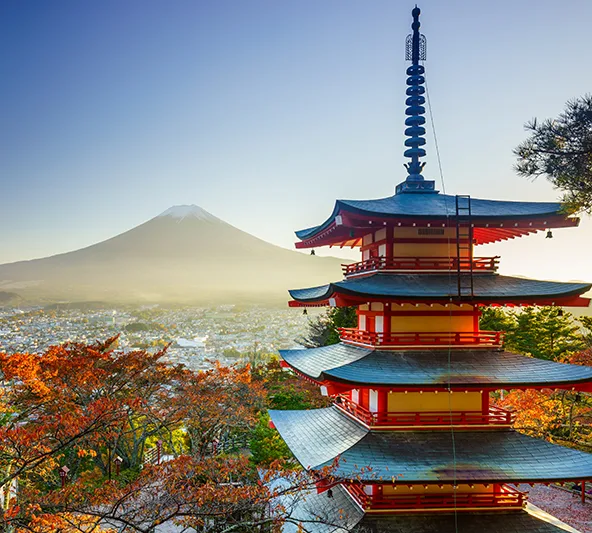
Book hotels in Japan with Avios
Avios Hotels, powered by Expedia, gives you access to thousands of properties across Japan, from boutique city hotels and traditional onsen stays to luxury resorts and convenient airport hotels. Whether you're planning a single-city break or a two-week itinerary, booking everything through one platform makes it easy to keep your accommodation organised while collecting Avios for your next trip – or if you prefer, you can use Avios you've already collected to pay for part or all of your stay.
The hotels featured in this guide are all available through Avios Hotels and are recommended from my own experience travelling around Japan.
Tokyo: the perfect place to start
For most visitors, Tokyo is the obvious first stop and a brilliant base from which to explore Japan. It's home to many of the country's best-known attractions, including Tokyo Tower, Tsukiji Market, Shibuya Crossing and Sensō-ji Temple.
Despite its size, Tokyo is surprisingly easy to get around. Load a digital Suica or PASMO card onto your phone and you can simply tap in and out of the subway. Stations are well signposted, lines are colour coded and all major attractions are easy to reach, making it simple to explore a different neighbourhood each day.

Where we stayed: Mustard Hotel, Shimokitazawa, Tokyo
Why we chose it: Located just a few subway stops away from the main shopping and entertainment districts of Shibuya and Shinjuku, Shimokitazawa is an up-and-coming creative neighbourhood where vintage lovers will feel right at home. Rather than the iconic Japanese designers like Issey Miyake and Yohji Yamamoto, fashion stores in Shimokitazawa lean toward American vintage – think 1950s Levi’s, baseball jerseys, flannel and punk band t-shirts.
Mustard Hotel exemplifies this kind of effortless cool with its contemporary design with its minimal wood surfaces, barista-made coffee at their in-house bagel bar and the chicest complimentary pyjamas for you to wear while staying at the hotel.
Each room also comes with its own record player and guests can borrow from their curated library of LPs at reception.
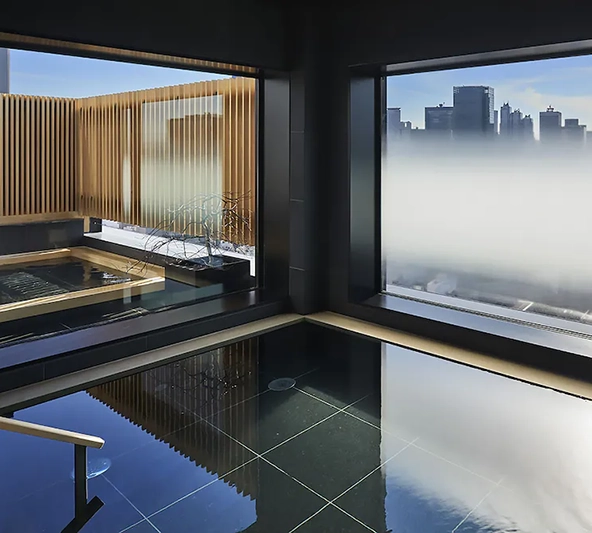
Where we stayed: Onsen Ryokan Yuen Shinjuku, Tokyo
Why we chose it: If there's one experience I'd recommend to everyone visiting Japan, it's staying somewhere with an onsen.
An onsen is a heated, mineral-rich bath traditionally found in Japan's volcanic regions. Onsen Ryokan Yuen Shinjuku brings that experience into the heart of Tokyo, allowing you to enjoy a traditional onsen without leaving the city.
Located on the 14th floor, the hotel's indoor and outdoor baths stay open until 2am, making them the perfect place to unwind after a day of sightseeing—or a soothing way to beat jet lag. There are few things more relaxing than soaking in a 40-degree bath while looking out across Tokyo's skyline at night.
One thing to be aware of is that tattoos are generally not permitted in public onsens. However, Onsen Ryokan Yuen Shinjuku also offers private onsen suites, allowing guests with tattoos to enjoy the experience too.
Kyoto: where Japan's traditions come to life
As Japan's former imperial capital, Kyoto is home to more than 1,000 temples, beautifully preserved wooden streets, peaceful gardens and centuries-old traditions that continue today. Although the city has become busier in recent years, visiting thoughtfully and respectfully is still an incredibly rewarding experience.
It's also wonderfully walkable. While buses and trains connect the city, many of Kyoto's most famous sights are best explored on foot. Choosing the right neighbourhood makes it much easier to experience Kyoto early in the morning or after the day-trippers have left.
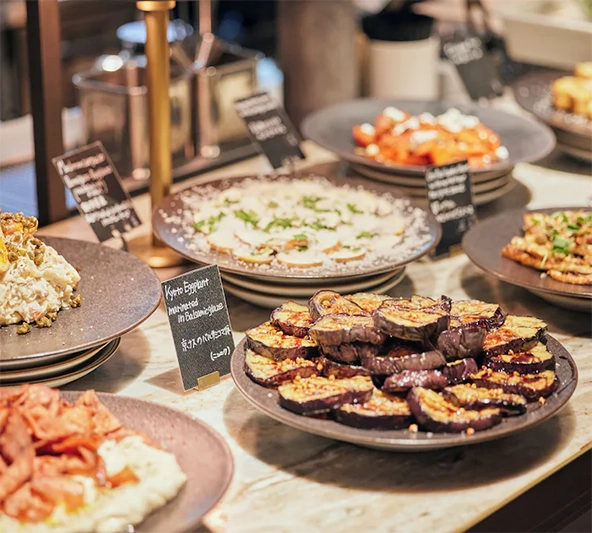
Where we stayed: Nohga Hotel Kiyomizu, Kyoto
Why we chose it: This modern and welcoming hotel is ideally located close to the historic Higashiyama district, which made it an excellent base for exploring many of the city's most famous landmarks, including Kiyomizu-dera Temple, Yasaka Shrine and the beautifully preserved streets of Sannen-zaka and Ninen-zaka, which are all a short – albeit rather bracing – uphill walk away.
Its contemporary design takes inspiration from traditional Japanese craftsmanship, creating a hotel that feels modern while still reflecting the character of Kyoto. The restaurant’s set lunch soon became one of our favorite food options. It includes a refined but unlimited salad bar serving Italian food (great for parents who are trying to add veggies to their children’s meals while traveling) alongside a main pasta dish and milk flavored ice cream for pudding.
Their in-house bakery, serving everything from brownies to cinnamon buns to sourdough sandos, will give you the fuel you’ll need for a day’s sightseeing.
Osaka: Japan's kitchen
If Tokyo is Japan's bustling capital and Kyoto its cultural heart, Osaka is where you'll come to eat.
Known as "Japan's kitchen", the city has built its reputation on incredible street food, lively nightlife and a laid-back personality that feels noticeably different from its neighbours. It's the perfect place to spend an evening wandering through Dotonbori, trying local specialities like takoyaki and okonomiyaki, or exploring the bustling streets of Namba.
For families, Osaka also makes an excellent base. Universal Studios Japan is home to Super Nintendo World™ and The Wizarding World of Harry Potter™, while Osaka Aquarium Kaiyukan and LEGOLAND Discovery Centre offer plenty to keep younger children entertained.
Like Tokyo, Osaka has an excellent public transport network, making it easy to reach neighbourhoods including Namba, Umeda and Shinsekai.
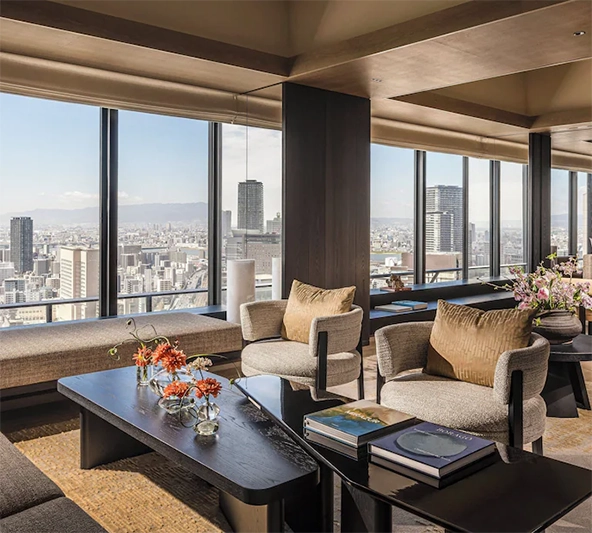
Where to stay: Four Seasons Hotel Osaka
Why it’s great: Although Four Seasons is known for contemporary luxury, this hotel also embraces traditional Japanese design. One of its most distinctive features is GENSUI, a collection of ryokan-inspired rooms and suites that blend traditional craftsmanship with the comfort and service you'd expect from the brand. It's a thoughtful nod to Japan's heritage and makes the hotel feel far more connected to its surroundings than a typical luxury city hotel.
Its location also makes it an excellent choice for families. Universal Studios Japan, Osaka Aquarium Kaiyukan and LEGOLAND Discovery Centre are all easily reached by public transport.
Naoshima: Japan’s art island is unlike anywhere else in the world
Japan's big cities deserve their place on every itinerary, but if you have the time, I'd encourage you to add Naoshima to your list. You can reach the island by ferry from Uno, which is easily connected by train from Osaka.
Often called Japan's art island, Naoshima combines world-class contemporary art with beautiful coastal scenery. Hire a bike or use the local bus to explore the island's galleries, where you'll find Monet's Water Lilies at Chichu Art Museum, works by David Hockney, Jean-Michel Basquiat and Andy Warhol at the Benesse House Museum, and Yayoi Kusama's iconic Yellow Pumpkin overlooking the Seto Inland Sea.
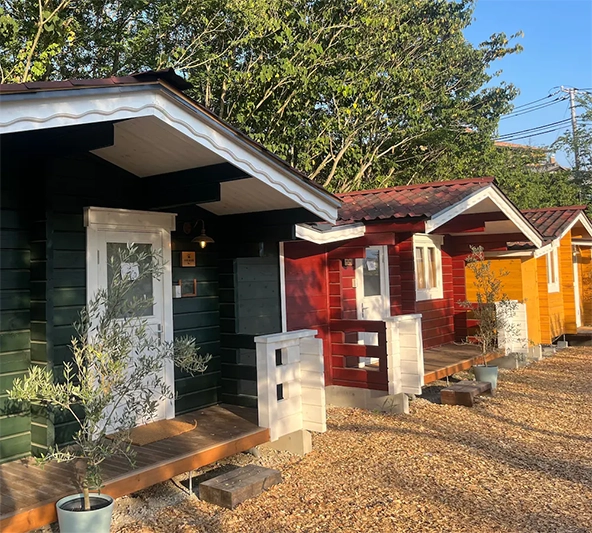
Where to stay: Naoshima Cottage
Why it’s great: Staying overnight transforms the experience of visiting Naoshima and gives you the time and space to enjoy the island’s stunning natural landscape and iconic outdoor art.
Many visitors arrive on the morning ferry and leave again later the same day. Spending the night gives you the opportunity to enjoy the island at a much more relaxed pace, with quieter museums, peaceful beaches and evenings after most day visitors have gone home.
Naoshima Cottage provides a comfortable base for exploring the island while allowing you to make the most of everything Naoshima has to offer.
Hiroshima: a city that will stay with you
While it's possible to visit Hiroshima as a day trip from Kyoto, I'd recommend spending at least one night here. Not only does it give you more time to explore the city itself.
Today, Hiroshima is a vibrant, welcoming city with excellent food, beautiful riverside parks and a relaxed atmosphere that's noticeably different from Japan's larger cities. While its history understandably draws many visitors, there's much more to discover than the Peace Memorial Park.
The Hiroshima Peace Memorial Museum is one of the most moving places you'll visit in Japan, offering a powerful and unflinching reminder of the horrors of the Second World War. It's an experience that stays with you long after you've returned home.
Beyond its history, Hiroshima is also famous for its food. Be sure to try Hiroshima-style okonomiyaki, a layered savoury pancake that's prepared differently from the version you'll find in Osaka. The city is also the gateway to Miyajima, home to the iconic floating torii gate of Itsukushima Shrine and one of Japan's most beautiful day trips.
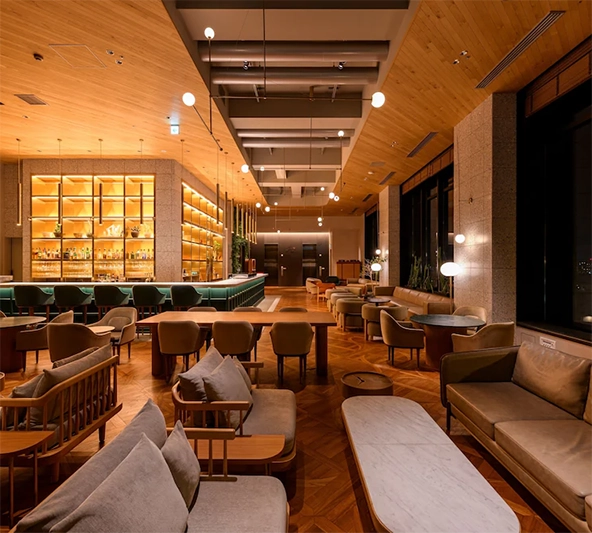
Where we stayed: The Knot, Hiroshima
Why we chose it: The Knot Hiroshima is a 14-storey contemporary hotel that is perfect for exploring many of the city's key attractions, including the Peace Memorial Park, Peace Memorial Museum – both of which are meters away from the hotel's entrance, as well as the lively Hondori shopping district.
The hotel's contemporary design and convenient location make it a great base if you want to balance sightseeing with great restaurants and cafés in the evenings.
The rooms are noticeably more spacious than many you'll find in Tokyo, making the hotel a particularly good option for families or anyone looking for a little more room after several nights travelling around Japan.
Finish your trip stress-free
If you're flying back to London from Tokyo Haneda Airport, there's a good chance you'll have an early departure. Rather than setting an early morning alarm and navigating Tokyo with luggage before sunrise, we decided to spend our final night at the airport.
After two weeks travelling around Japan, it gave us one last evening to relax, repack our suitcases and enjoy our final meal without constantly checking the time. The following morning, we simply walked to check-in – that extra convenience felt like a luxury in itself.
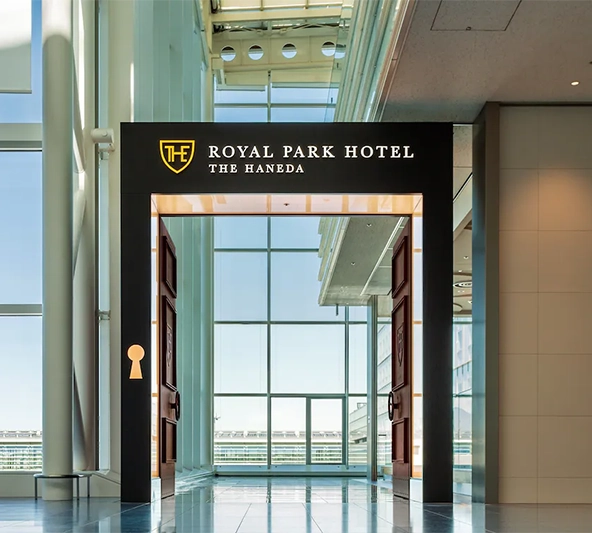
Where we stayed: The Royal Park Hotel, Tokyo Haneda Airport, Terminal 3
Why we chose it: Located inside Haneda Airport's Terminal 3, The Royal Park Hotel is directly connected to the international departures lobby, making it hard to beat for convenience if you're flying home the next morning.
Despite its location, it doesn't feel like a typical airport hotel. The rooms are quiet, comfortable, and big enough to keep all the excess luggage we had accumulated while on our trip. The all-day restaurant makes it an easy and convenient place to unwind before a long-haul flight.
Rather than squeezing in one last commute across Tokyo, we could enjoy a relaxed final evening knowing our journey home would begin just a few minutes from our room.
Top tips for staying in Japan
Use the luggage delivery service
One of the best travel tips we picked up in Japan was using the luggage delivery service offered by most hotels.
Rather than dragging large suitcases onto crowded trains, you can send your luggage directly to your next hotel—often arriving within 24 hours—while you travel with just a small backpack. It's especially useful if you're travelling on the Shinkansen bullet train, where space for larger suitcases often need to be reserved in advance and not always available. For extra peace of mind, we popped an AirTag into each suitcase.
Download a Suica or PASMO card before you arrive
Adding a digital Suica or PASMO card to your phone before you travel makes getting around Japan incredibly easy. You can use it on subways, local trains and buses, as well as in many convenience stores, including 7-Eleven.
If you're planning to travel between cities, remember you'll need separate tickets for the Shinkansen.
Leave extra time for connections
Many stations in Japan are enormous, with multiple platforms and exits. Changing between subway lines, local trains and the Shinkansen often involves a longer walk than you'd expect, so allow at least 15 minutes for connections — longer if you're travelling with luggage or children.
Ready to plan your own Japan adventure?
Japan is one of those destinations that rewards curiosity. From Tokyo's creative neighbourhoods and Kyoto's historic streets to Hiroshima, Naoshima and unforgettable onsen experiences, every stop offers something different.
Whether you're planning your first visit or returning to explore somewhere new, Avios Hotels gives you another way to make the most of your Avios throughout your journey — not just getting there, but while you're there too.
How to get the most out of Avios



Ready to start your own adventures with Avios?
Start collecting on your every day spend and make the most of Avios

.
.